
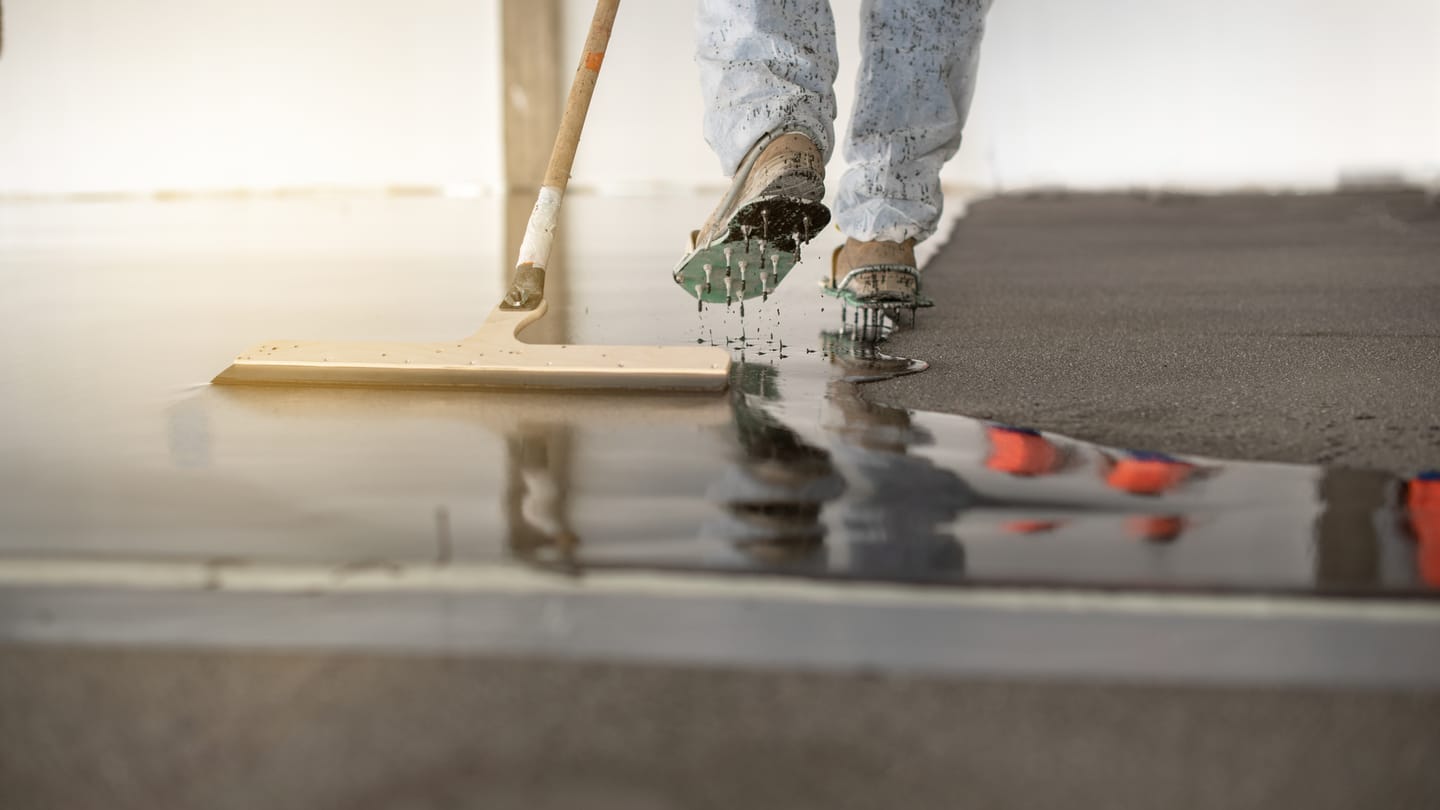
Contractors pollution liability insurance is the name to ask for when you want a separate pollution liability policy beside your general liability. Epoxy fumes and solvent vapors can fall inside the general liability pollution exclusion, whose typical definition of a pollutant names vapor and fumes. What a separate policy may answer is set by its own wording.
What contractors pollution liability insurance is
Contractors pollution liability insurance is the name to ask your agent for when you want a separate policy that may answer pollution claims arising from your contracting work. The sources quoted here do not use that name. The Texas Department of Insurance, in its consumer page on commercial general liability, describes «a separate pollution liability policy» in general terms.
It describes the arrangement in its own words, typo and all: «If your businesses has a significant pollution exposure, you may choose, in conjunction with your insurer, to include a total pollution exclusion and purchase a separate pollution liability policy that may provide coverage better suited to the risk and is easier to rate based on the nature of your business.» The phrase to hold onto is «may provide coverage better suited to the risk». It is a description of what such a policy can be built to do, not a promise about any policy you are quoted.
So the policy is easiest to understand by what sits around it. It stands next to your general liability, it may answer questions the general liability pollution exclusion leaves open, and it is read on its own definitions.
The gap the general liability pollution exclusion leaves
The gap exists because a general liability policy can carry a pollution exclusion aimed at the kind of injury a fumes complaint describes. The Texas Department of Insurance says: «The pollution exclusion eliminates coverage for injuries or damages to a third party resulting from a pollution event arising from your business operations.» The same page adds that «The exclusion applies to the actual, alleged, or threatened discharge, dispersal, seepage, migration, release, or escape of pollutants.»
Read the word «alleged» slowly. On that wording, the exclusion is written to reach a claim that only says pollutants escaped, not just a claim where someone proved it.
The definition is where an epoxy job comes close. The Texas page writes that «A pollutant is typically defined as any solid, liquid, gaseous, or thermal irritant or contaminant, including smoke, vapor, soot, fumes, acids, alkalis, chemicals, and waste.» Vapor, fumes and chemicals are the words a coating job brings to mind.
Set that beside what general liability is for. The Texas page describes premises and operations coverage this way: «Premises/operations coverage pays for bodily injury or property damage that occurs on your premises or as a result of your business operations.» The pollution exclusion carves a piece out of that promise, and the piece it carves is the piece a separate pollution policy is asked about.
The California Department of Insurance lists pollution among «The major exclusions under a CGL policy» in its commercial guide and adds: «It is always important to read and understand all coverage exclusions; however, it is particularly critical in a liability policy.» Read these state guides as a general description, and check your own policy for its wording.
The in-building exception and the word may
The in-building exception is a narrow piece of coverage that a general liability pollution exclusion may contain. The Texas Department of Insurance introduces it carefully: «The pollution exclusion included in most general liability policies may contain some of the following exceptions that could provide limited coverage for:» Among the exceptions it lists is this: «Injuries or damage sustained within a building and caused by the release of gases, fumes, or vapors from materials brought into the building in connection with operations performed by you or a contractor or subcontractor working on your behalf.»
Resin, hardener and solvent carried into a customer’s kitchen, school or garage for a coating job sit close to that description. Before you lean on it, notice the qualifiers. The exclusion «may contain» exceptions. The exceptions «could provide» coverage. The coverage is «limited». None of those words is a promise.
Check your own policy for the exception and read exactly how it is worded. The Texas page tells readers to «review your policy and any endorsements», so read every endorsement that mentions pollution as well. If the exception is missing or narrow, that is a reason to ask what a separate pollution liability policy would add.
What a total pollution exclusion does to the gap
A total pollution exclusion widens the gap on the general liability policy itself. The Texas Department of Insurance says: «Total pollution exclusions eliminate all coverage, including coverage for premises/operations and products/completed operations.» If «eliminate all coverage» means what it says on your policy, ask how the in-building exception described above could still apply, and expect that it may not.
The Texas page pairs the total exclusion with the separate policy in the same sentence: a business may choose «to include a total pollution exclusion» and purchase a separate pollution liability policy. Ask whether your general liability policy includes a total exclusion, and read the full policy and every endorsement that mentions pollution to find out. When it does, the question of contractors pollution liability insurance is no longer abstract.
What contractors pollution liability insurance may answer on a coating job
On a coating job, the separate policy may answer for vapors and fumes that reach people who do not work for you, and every part of that answer turns on its wording. Start with what the exposure is.
CPWR, the Center for Construction Research and Training, says in its hazard alert on epoxy resin systems that «Epoxy resin systems (or epoxies) are a chemical mixture widely used in the construction industry because of their strong adhesion to surfaces, durability, and anticorrosive properties.» The same alert warns that epoxies are dangerous if you «breathe in the vapors, mists, or particles when spraying them.»
The U.S. Environmental Protection Agency, on volatile organic compounds indoors, says «Volatile organic compounds (VOCs) are emitted as gases from certain solids or liquids. VOCs include a variety of chemicals, some of which may have short- and long-term adverse health effects.» It notes that «Paints, varnishes and wax all contain organic solvents», and among the health effects it lists «Eye, nose and throat irritation» and «Headaches, loss of coordination and nausea». For a contractor, this line deserves attention: «while people are using products containing organic chemicals, they can expose themselves and others to very high pollutant levels, and elevated concentrations can persist in the air long after the activity is completed.» The word «others» is the occupant down the hall.
The diethylenetriamine entry in the NIOSH pocket guide carries a smell of its own. That pocket guide entry, for an amine named as an epoxy curing agent in an older California fact sheet that carries its own note that regulatory requirements or recommendations have changed since it was written, describes a «Colorless to yellow liquid with a strong, ammonia-like odor.»
With that exposure in mind, put these questions to any pollution liability quote:
- How does the policy define a pollutant, and does that definition reach vapors, fumes and VOCs from coatings?
- Does it answer for injury to occupants of a building that stays in use while you work?
- Does it answer for a business that says it lost the use of its space while the air cleared?
- Does it answer for claims that arrive after the job is finished?
- How does it handle the defense of a claim?
Real-World Scenario: A crew lays a body coat and topcoat in the back hall of a restaurant overnight, with the dining room closed off by plastic sheeting. The restaurant opens on schedule the next morning. By lunch, servers say the smell is giving them headaches, a diner complains, and the owner closes early. Days later the contractor gets a letter asking for lost sales and medical bills. Whether that claim gets past the general liability pollution wording turns on how that policy defines a pollutant, whether it carries the in-building exception and whether it includes a total pollution exclusion. If the contractor carries a separate pollution liability policy, the letter goes there too, and that policy’s own wording decides what it may answer.
Buying contractors pollution liability insurance alongside general liability
You buy it as a separate policy that sits beside your general liability, and the work is in reading the policies together. Ask your agent to quote them at the same time, so the pollution wording on the general liability and the coverage grant on the pollution policy can be compared line against line.
Read their definitions side by side. Where the general liability defines a pollutant and excludes it, check whether the pollution policy defines the same thing and covers it.
Ask the same question about your umbrella liability policy. The Texas page says «The umbrella policy also provides liability coverage for exposures not covered under the primary CGL insurance policies and not excluded by the umbrella liability insurance policy.» The closing words are the place to look: ask whether your umbrella carries its own pollution exclusion, and whether it sits above the pollution policy at all.
Fit the question to the work. Ask it for commercial epoxy work in kitchens, schools and warehouses that stay in use while the floor goes down, and ask it for residential garage and barn floors, where an attached garage can open into the house. When you compare quotes for epoxy flooring business insurance, compare the pollution wording, not only the price.
When a customer’s contract asks about pollution coverage
A customer’s contract can turn the question from optional to required, so read it before you sign. Ask these questions of every commercial contract:
- Does it ask you to carry pollution liability coverage, and does it say how that coverage must be written?
- Does it ask for a certificate showing the pollution policy, and does it ask to be named on it?
- Does it ask your general liability policy to answer for something its pollution exclusion removes?
Send the contract to your agent with the quote request. Ask your agent to settle any contract requirement in the policy wording before the job, not at the door on the morning of the job.
Why workers compensation is a different policy
For your own crew’s exposure to fumes and solvents, look to workers compensation, and ask how the pollution policy’s wording treats your own employees. The Texas wording speaks of injury «to a third party», and the California guide lists «workers compensation and employers liability» among the major exclusions under a general liability policy. For an injury or illness to someone on your payroll, look to workers compensation.
The crew’s risks are real. CPWR’s hazard alert says «Exposure to epoxies can cause different types of dermatitis (skin inflammation).» It adds that «Some workers also develop an allergy (called sensitization). Once a worker becomes sensitized, they can have an allergic reaction each time their skin is exposed to these chemicals, even in small amounts.» If your system uses a polyurethane topcoat, the archived NIOSH page on isocyanates calls isocyanates «a component of many polyurethane systems» and says «Isocyanates can also sensitize workers, making them subject to severe asthma attacks if they are exposed again.» Tell your agent which topcoats you use.
Ventilation and safety data sheets as risk control
Ventilation and safety data sheets are risk control, not coverage; ventilation helps remove vapors from the air. CPWR puts it directly: «Ventilation is critical for removing chemical vapors and aerosol particles from the air.» It also describes what OSHA asks of an employer, including «Giving you access to safety data sheets for hazardous products» and «Labeling hazardous products». Habits worth building:
- Keep a safety data sheet for every product on the truck, where the crew can reach them on the jobsite.
- Write a short ventilation plan for any occupied building: where the air goes, where the fans sit, and which rooms stay closed.
- Tell the building owner, in writing, when the space can be reopened and what occupants should expect to smell.
- Keep a job log with photos of the setup, the sheeting and the fans.
None of this decides coverage, but it is worth having on paper when you ask for a pollution quote. If you would like another set of eyes on your general liability and pollution wording, tell us about the work you coat and ask us to read it through with you.