Insurance for epoxy flooring contractors

Epoxy Flooring Insurance

Epoxy Flooring Insurance insures the businesses that grind the slab and put down the coating: garage and barn floors on the residential side, and commercial buildings, kitchens, warehouses, bathrooms, pool houses and schools on the other. One specialty program built around the two things a generic policy leaves thin for this trade: the floor that fails after you leave, and the fumes, dust and chemicals your crew works with every day.

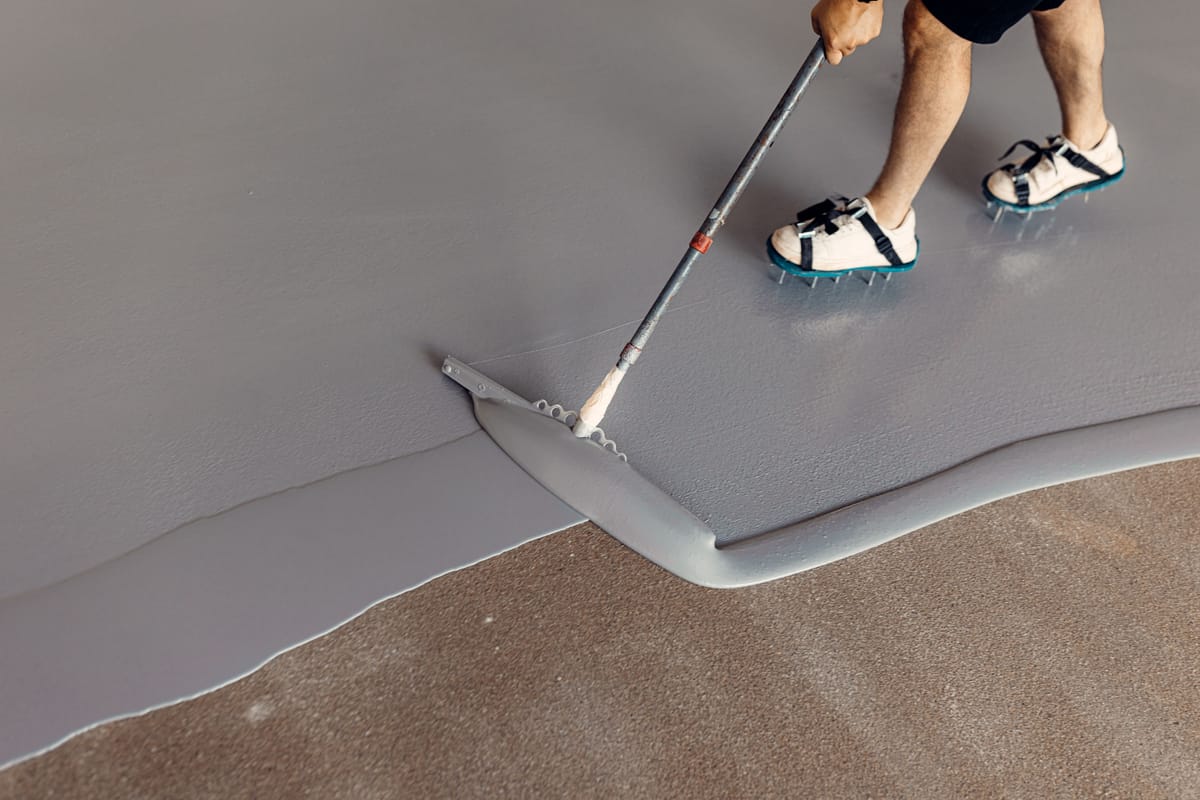
A worker in spiked shoes pulls a gauge rake through a gray floor coat poured over bare concrete

Residential and commercial floor coating, one program

Epoxy work splits two ways, and the insurance follows the split. Who you work for decides what a client will ask to see on your certificate, how much liability is enough and what a claim tends to look like. Both sides share the same core: insurance for an epoxy coating business, built around grinding, coating and the floors you leave behind.

Residential epoxy flooring contractors

Garage floors and barn floors. Smaller jobs, in a home that can be occupied while you work: the risks are a homeowner who slips on a floor before it cures, a coating that peels in the first winter, and a crew working around a family’s cars, tools and pets. Barn floors bring their own questions — livestock traffic, washdown and a working farm that does not stop while the floor cures.

Commercial epoxy flooring contractors

Commercial buildings, kitchens, warehouses, bathrooms, pool houses and schools. Bigger floors, tighter schedules and contracts written by owners and general contractors that spell out the limits, the additional insureds and the certificates they need before you mobilize. Kitchens and pool houses add wet, slick surfaces; warehouses add forklifts and long cure windows; schools add occupied buildings and summer deadlines.

Coverage for epoxy flooring contractors

Six policies cover the core of what an epoxy flooring business needs. Each one has a job, and the gaps between them are where claims go wrong: an injury that both liability and workers’ compensation point at, a grinder stolen from a trailer that the shop policy never saw, a contract that asks for more limit than the policy carries.

General Liability

The policy that answers first when a finished floor is blamed: a coating that lifts after the crew leaves, a slip on a fresh surface, or damage to a client’s property while the work is under way.

Workers Compensation

Grinding throws silica dust, resins and hardeners reach skin, and respirators are daily kit. When someone on your crew is hurt on the job, this is the policy built for it.

Commercial Auto

The truck and trailer that haul grinders, vacuums and material from job to job, and the people on your crew who drive them.

Umbrella Liability

A layer above liability and auto for the claim that outgrows them, and the extra limit a commercial owner or general contractor may write into the contract.

Commercial Property

The shop you own or lease and what is inside it: stored resin and flake, spare equipment, the office.

Where an epoxy floor claim can land

A claim against a coating contractor can arrive after the job is done. A floor that delaminates, blisters or turns slick and puts someone on the ground is a question for the completed operations part of your general liability policy, which is written for damage and injury that show up after you finish. Two limits sit beside it. Redoing your own work may not be what the policy pays for, and the fumes, solvents and vapors that come with epoxy can meet the pollution exclusion, which a liability policy can carry in some form. How those pieces fit depends on the policy’s wording, so we read the forms with you before a claim, not after one.

What a carrier asks before it quotes an epoxy contractor

Underwriters price a coating business on how the work is done, not on the word “flooring”. Expect questions like these, and expect better terms when the answers are clear:

  • How you prep the slab. Diamond grinding with dust collection, shot blasting or acid etching — and whether your crew wears respirators and you have a written silica plan.
  • What you put down. Epoxy, polyaspartic or urethane topcoats, flake or metallic systems, and whether you mix solvent-based products indoors.
  • Moisture testing. Whether you test the slab before you coat and keep the results, because moisture can be behind a failure that comes back as a claim.
  • Where the work happens. Occupied homes, food service, schools and warehouses each read differently, and so does the mix between residential and commercial.
  • Who does the work. Your own employees or subcontractors, and whether subcontractors carry their own insurance and name you on their certificates.
  • Warranties you give. A written warranty is a promise about your own work; the policy and the warranty are not the same thing, and a carrier will ask how you handle callbacks.

None of these is a reason to be turned down. Each is a place where a well-described operation earns a better quote than a vague one.

Who we are

Epoxy Flooring Insurance is a specialty brand of Wexford Insurance, LLC, an independent agency in Greenwood, Indiana, led by Nate Jones, CPCU. We focus on one trade, epoxy and floor coating contractors, and place coverage with carriers that want the work.

Our specialty panel is 28 carrier markets we hold appointments with: West Bend Insurance Company, Goodville Mutual, UFG, SECURA, Grand River Insurance, Liberty Mutual, Travelers Insurance, The Hartford, Brickyard Insurance Company, AMERISAFE, Texas Mutual, SFM Mutual, Hastings Insurance, Cincinnati Insurance, CNA, AmTrust, Encova, Donegal Insurance Group, Frank Winston Crum, ICW Group, Markel, NEXT Insurance, Ohio Mutual, Pie Insurance, Progressive Commercial, GEICO, THREE by Berkshire Hathaway and Westfield Insurance.

Which of them will quote a given risk varies by state, by the work you do and by your loss history, and appetite changes; we review the panel regularly and adjust it when it does.

A floor coating business is easy to misread from the outside. An underwriter who sees “flooring” and stops there misses the grinding dust, the chemistry and the cure time that make this trade its own class. We describe your operation the way you run it, so the carrier prices the work you actually do. When a client or general contractor needs a certificate, an additional insured endorsement or a change before a job starts, you deal with the same people who placed the policy.

Licensed in 48 states

We write epoxy flooring contractors in every state except Alaska and Hawaii. State rules on contractor licensing, workplace safety and coatings differ, and each state page will walk through its own. We start with these states:

  • Indiana
  • Ohio
  • Michigan
  • Illinois
  • Kentucky
  • Florida
  • Texas
  • Arizona
  • California
  • South Carolina
  • Arkansas
  • Massachusetts

Crews that cross state lines need a program that follows them. Workers’ compensation is arranged state by state, a commercial auto policy has to reflect where the trucks run, and some states and cities ask a contractor to register before working there. Working in more than one state? Tell us which ones when you request a quote, and see the full list on our states page.

How quoting works

  1. Tell us about the work. The quote form asks what you coat, residential or commercial, how big your crews are, what your grinders and equipment are worth and whether you have a shop.
  2. A licensed agent reads it. Every request is read by a person who places this trade, and we follow up by phone or email with the questions a carrier will ask.
  3. We take it to market. We match your operation to the carriers on our panel that write it, compare what comes back and walk you through the differences before you decide — what each policy covers, where it stops and what it asks of you.
  4. We stay on it. Certificates for new jobs, changes when you add a truck or a crew, and a review before renewal so the program keeps up with the business.

Nothing changes or binds coverage until a licensed agent confirms it with you directly.

Running an epoxy flooring business

Owners ask us more than insurance questions. Our owner resources, arriving on the blog, take on the ones we hear:

  • Is an epoxy flooring business profitable? What shapes the margin on a coating job, from prep time to material waste to callbacks.
  • What it costs to start. The equipment, vehicle, insurance and licensing decisions a new coating business makes before its first floor.
  • Do you need a license to do epoxy flooring? How licensing works across states, and where to check the rule in yours.
  • Training and certification. What manufacturer and industry training covers, and what it does and does not change about how a carrier sees your business.

The people behind Epoxy Flooring Insurance

More about the agency and its licensing is on our about page.

Epoxy flooring insurance questions

Do you insure both garage and commercial epoxy work?

Yes. We can arrange coverage for residential coating, such as garage, basement and barn floors, and for commercial floors in warehouses, shops, kitchens and other businesses. Both sides draw on the same policies, from general liability and workers’ compensation to commercial auto and inland marine, but the certificate a client asks for, the limits a contract sets and the claims each side faces differ, so we set the program up around the work you take.

Do epoxy flooring contractors need insurance?

In practice, yes. Homeowners, commercial owners and general contractors can ask for a certificate of insurance before you start, and a state can require workers’ compensation once you have employees. Even where nothing is required, a coating failure or an injury on the jobsite can land on the business without it.

Which states license floor coating work?

It varies from state to state. Some states license contractors once a job passes a value threshold, some require a registration, some license only certain trades, and some have no statewide license at all; cities and counties can add their own rules. Our state pages walk through each state from its own licensing source, and a license is never a substitute for insurance.

Where can I see what moves the cost in my state?

Our cost guides take the licensed states one at a time and walk through what an insurer can weigh there, such as the state’s workers’ compensation rules, payroll, the vehicles you run and the value of your equipment. They publish no rates, because a quote built on your own numbers is the only number worth having.

Which policy answers when a finished floor fails?

General liability, through the completed operations part of the policy, which responds to damage or injury that happens after you finish. What it may not pay for is redoing your own work, and claims involving fumes or solvents can run into the pollution exclusion. The wording varies by policy, which is why we read it with you.

Does forming an LLC protect an epoxy business from claims?

Not from claims. Forming an LLC separates the business from your personal assets, but it does not pay a claim, defend a lawsuit or cover an injured employee; business insurance does that. The LLC itself is what clients, landlords and general contractors expect to see named on the certificate.

For licensing state by state, see our guide to whether you need a license to do epoxy flooring. For what an LLC does and does not protect, see our guide to whether an LLC needs business insurance. For what moves the price in each state, see our cost guides; for a floor that fails after the job, see general liability and our guide to completed operations coverage.

Get a quote for your epoxy flooring business

Tell us what you coat, who does the work and where, and a licensed agent will build the program around it. If a job is waiting on a certificate of insurance, say so in your request and we will start there.