
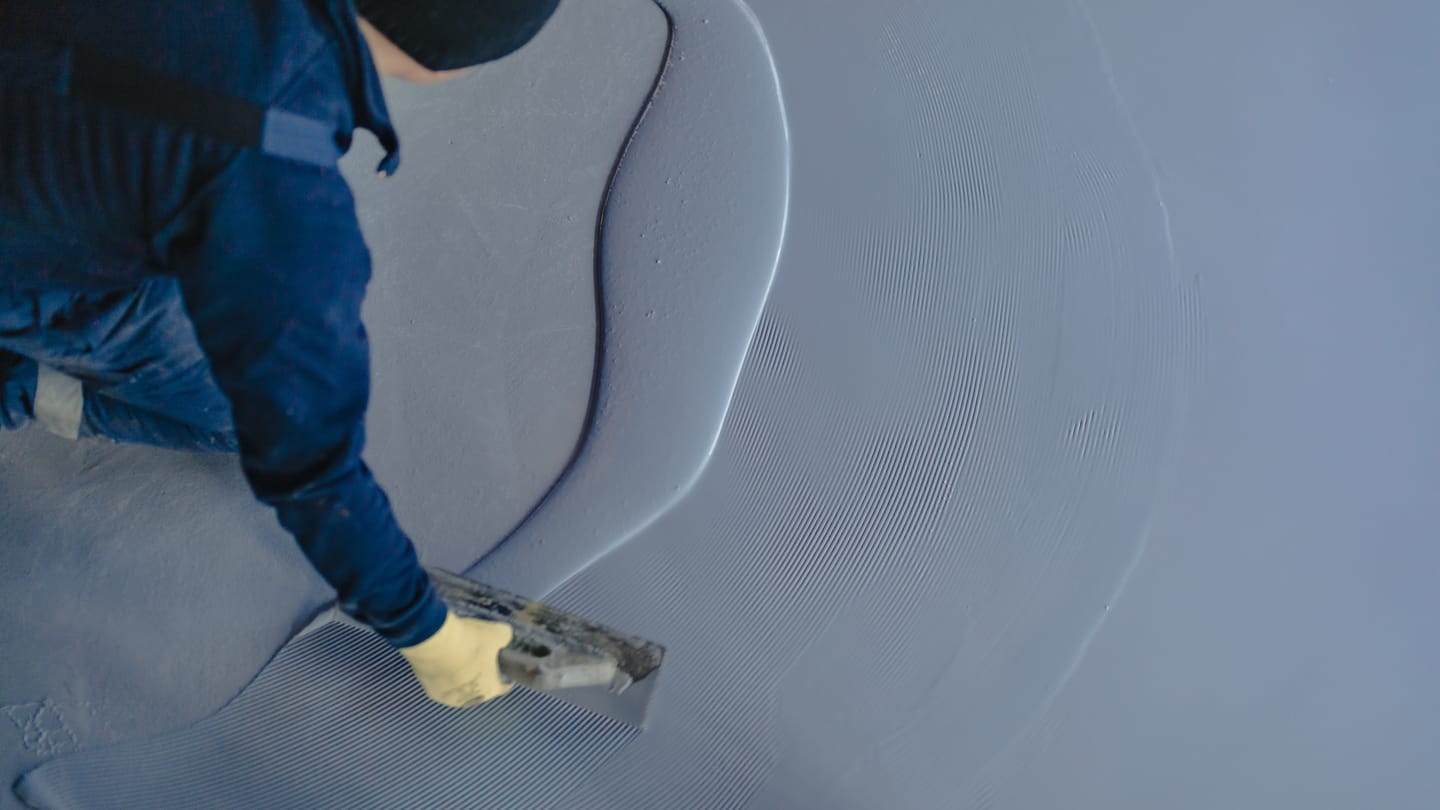
Completed operations coverage for contractors is the part of a general liability policy that looks at your work after the crew has packed up and gone. For an epoxy contractor, that means a coated floor in someone else’s building: injury or damage to other property it causes may reach this coverage, while the floor itself generally does not.
What completed operations coverage for contractors answers
It answers for bodily injury and property damage that your finished work causes to other people, away from your own shop. The Texas Department of Insurance puts it in a sentence: «Products/completed operations coverage pays for bodily injury and property damage that occurs away from your business premises and is caused by your products or completed work.»
The California Department of Insurance says the same thing from the liability side: «Completed operations covers your potential liability for bodily injury or property damage that arises out of your completed work.» Notice the word «potential». The coverage is about a claim someone may bring, not a promise that any particular claim is paid.
The NAIC glossary names the trades it has in mind. Its entry for completed operations liability describes «policies covering the liability of contractors, plumbers, electricians, repair shops, and similar firms to persons who have incurred bodily injury or property damage from defective work or operations completed or abandoned by or for the insured». A crew that grinds a slab and lays down a resin system is exactly that kind of firm.
Put in coating terms, the exposure starts the moment the floor goes back into use. A shopper walking a showroom, a mechanic rolling a jack across a shop bay, a homeowner backing a car into the garage: each is a person your finished floor now meets without you there. This coverage sits inside your general liability policy, so the place to read it is that policy’s own wording.
Work in progress and finished work sit in different places
A general liability policy treats the job while you are on it differently from the job once you have left. The California guide describes the job in progress this way: «Premises liability covers liability for accidental injury or property damage that results from either a condition on your premises or your operations in progress, whether on or away from your premises.»
So a customer who slips on wet primer while the crew is still working is a work-in-progress question. A customer who slips on the same floor after it has cured and the crew has gone is a completed operations question. The injury looks the same; the part of the policy it meets does not.
The Virginia Bureau of Insurance adds a word that matters to a coating business: «It also provides coverage for claims occurring away from your premises and arising out of operations which have been completed or abandoned.» A job you walked away from before the topcoat went down, because the customer stopped paying or the slab turned out to be wet, is abandoned work, and the guide places it in the same section as finished work.
Ask your agent how your policy decides when work counts as completed. A phased commercial job, where the crew coats a warehouse bay by bay while the rest of the building stays open, can leave some areas finished and others still in progress on the same day.
The floor itself is your work
The floor you installed is generally not what this coverage pays to fix. The Texas page says: «Damage to Your Work - Generally, CGL policies exclude coverage for property damage to your work». It then gives an example from roofing that maps neatly onto a floor: «The policy may provide coverage for the repair or replacement of the vehicle but may not pay to repair the collapsed roof because the roof is your work.»
Swap the roof for a coating that lifts near a floor drain. Damage to the customer’s property around it may be a covered question; the cost to grind out and recoat your own system may not be. The California guide lists the same idea among its major exclusions, which end with «damage to your work; impaired property; sistership liability; and failure to perform».
That is why the causes of a coating letting go, such as moisture in the slab, thin prep or a rushed cure, belong in your own process before they belong in a claim. Our post on epoxy floor failure looks at those causes from the owner’s side. The insurance point is narrower: the policy is generally written to answer for what your work does to others, not for the work.
When a subcontractor did the work that went wrong
The your-work exclusion carries an exception that matters when you hire out part of a job. The Texas page says: «There is an exception to the exclusion for damaged work if a subcontractor working for you caused the damage».
Make a list of the work you sub out: a crack and joint repair crew, a shot-blasting outfit on a large slab, another installer brought in to finish a weekend job. If a subcontractor caused the damage, this exception is the place to look. It is described as an exception, and its exact reach depends on how your own policy words it.
Ask your agent whether your policy carries the exception and what it requires. Collect certificates from anyone who works under you, keep a written subcontract for each, and keep your job notes showing who did which part of the work. For more on what a general contractor expects from a coating sub, see commercial epoxy work.
A separate aggregate for products and finished work
Ask how your policy limits claims over finished work. The California guide says: «There is also a separate aggregate limit of liability in force for products and completed operations liability claims.»
An aggregate is a ceiling across the whole policy period, not per claim. The NAIC defines it as «the maximum dollar amount or total amount of coverage payable for a single loss, or multiple losses, during a policy period, or on a single project.» The California guide explains what happens at the ceiling: «When total claims for all these areas exceed a stated annual aggregate limit of liability, the policy limits are exhausted and no more claims will be paid from the policy for the duration of the policy period.»
For a contractor who keeps coating floors, every finished floor in use is drawing from the same aggregate. Read your declarations page to find it, and ask how your umbrella liability policy sits above it if a contract or your own comfort calls for more limit.
Occurrence or claims-made: why the date of the injury matters
When a finished floor causes harm long after the job, the policy’s trigger decides which year’s policy is asked to answer. The Texas page describes the occurrence trigger: «Occurrence policies cover claims arising from injury or damage occurring while the policy is in force, regardless of when the claim is first made.»
The Virginia guide describes the other: «A policy that is written on a claims-made basis covers only those claims reported during the policy period.» It also names what fills the gap when a claims-made policy ends: «Tail coverage covers claims resulting from incidents which occurred while a claims-made policy was in force but which are reported after the policy has expired.»
The sources we rely on here do not say how long a claim over finished work can follow a contractor. Ask a lawyer where you work. Then ask your agent which trigger your policy uses, and what happens to your finished jobs if you change insurers, sell the business or close it.
Callbacks, recalls and the line between a repair and a claim
A callback to fix your own work and harm that the work causes to others are separate questions, and the policy wording treats them separately. The Texas page adds a related exclusion: «Recall of Products, Work, or Impaired Property - CGL policies will not pay the cost to recall faulty products, work, or impaired property.» If you learn that a batch of resin was bad and decide to go back to every floor it touched, read that exclusion before you assume the policy pays for the trip.
Real-World Scenario: A crew coats a restaurant kitchen over a long weekend and the owner reopens on schedule. Weeks later the coating lifts along a drain line. A cook catches a boot on the raised edge, falls and pushes a loaded cart into a stainless prep table, denting it. The owner asks the contractor to pay for the cook’s injury, the table and a full regrind of the floor. The injury and the table are questions for completed operations coverage; the regrind runs into the your-work exclusion. The contractor’s own policy wording decides each part.
How you handle a callback also shapes what a later claim looks like. Write down what you found, what you fixed and what you told the customer. Our post on the epoxy floor warranty covers what to promise in writing, and where a warranty callback ends and a question for your liability policy begins.
Questions to put to your agent about finished jobs
Ask these before you rely on completed operations coverage, and ask them again when a contract or your mix of work changes:
- Does my general liability policy include products and completed operations, and does any endorsement limit or exclude it?
- What is the products and completed operations aggregate, and how does it relate to the general aggregate?
- Is the policy written on an occurrence or a claims-made basis, and if claims-made, what tail coverage is available?
- How does the policy word the your-work exclusion and the subcontractor exception?
- Does my umbrella follow the general liability on completed operations claims?
Ask them for the work you take on. Garage and barn floors put a finished floor in front of a family every day, while commercial kitchens, schools and warehouses put it in front of the public and a general contractor’s contract. When you compare quotes for insurance for an epoxy flooring business, compare the completed operations wording, not only the price.
If you would like us to read your completed operations wording with you, send us the details of the floors you coat, or read more about who we are.