
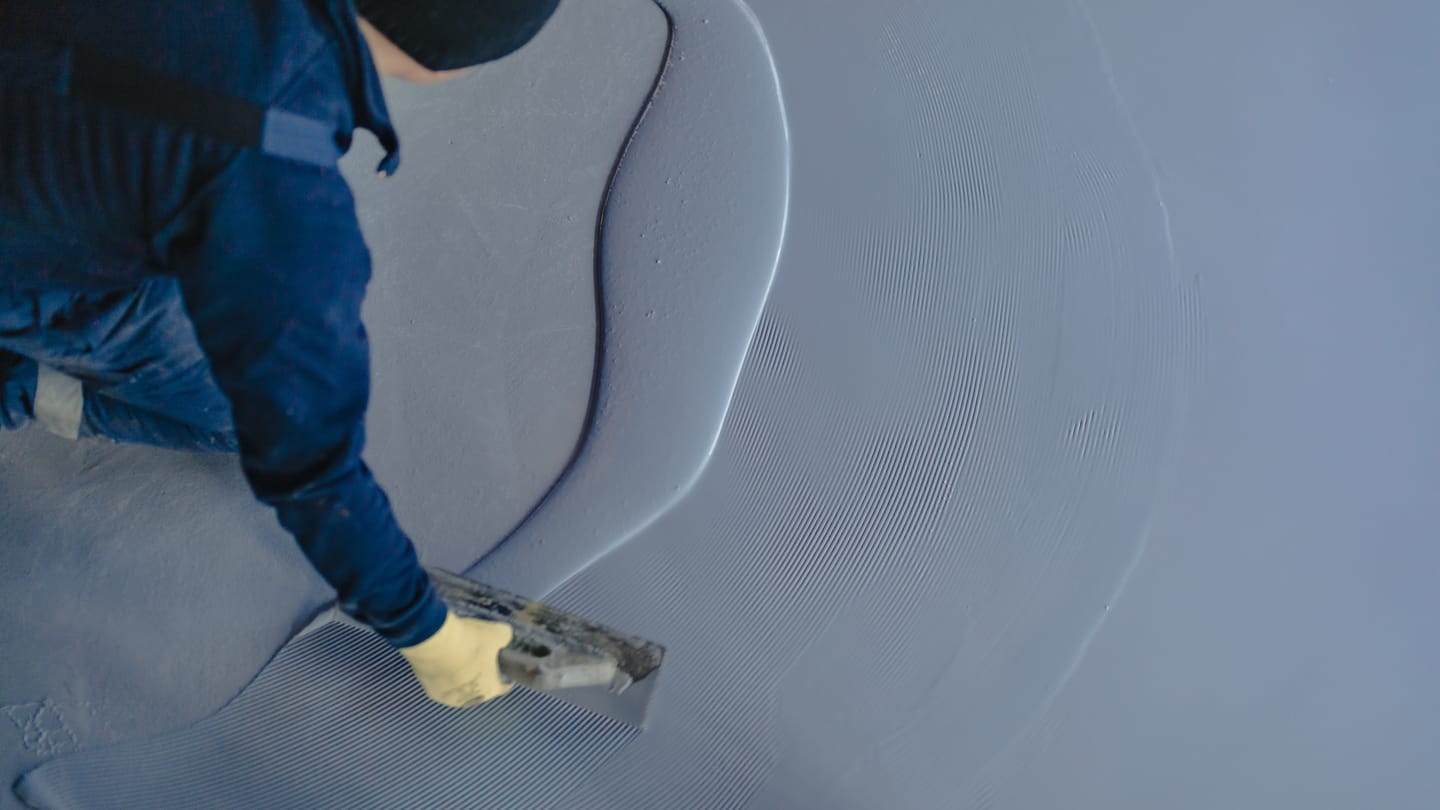
An epoxy flooring equipment list should open with the grinder and the dust control that goes with it, not with rollers and resin. Surface prep decides whether a coating holds, and grinding concrete brings in OSHA’s silica standard. Buy prep and dust control, then edging, respirators, mixing and application tools, then plan how the gear travels and is insured.
An epoxy flooring equipment list in buying order
Buy in the order the work happens on the slab, because a crew with fine rollers and no way to prep the concrete cannot finish a floor. The Small Business Administration’s guide to managing a business puts the planning step plainly: “Your business will need special assets and equipment to succeed. Figure out which assets you need, how to pay for them, and whether you should buy government surplus.”
For an epoxy business, a list built in that order can look like this:
- a walk-behind floor grinder, with the tooling your floors call for;
- the dust collector, or the water setup, that the grinder needs;
- an edge grinder with a shroud and its own collection;
- a HEPA-filtered vacuum for cleanup between passes;
- respirators, with fit testing and a written program;
- mixing drills, paddles, buckets, squeegees, rollers and spiked shoes;
- broadcast tools for flake or sand, if you sell those systems;
- a truck or trailer, and somewhere safe to keep it all.
The rest of this article walks through why the order matters and what each purchase brings with it. If you are still sizing the whole budget, our guide to epoxy floor business start up cost sets the equipment beside the other early expenses.
The floor grinder and the silica standard’s controls
Pick the grinder by what OSHA’s silica standard lets you run with it, because the standard names floor grinders directly. The reason sits in the dust: NIOSH’s page on silica and worker health lists “Concrete, brick, and cement” among the materials that contain crystalline silica, and says “Silicosis is a lung disease caused by inhaling excessive amounts of respirable crystalline silica. It is not reversible, but it is preventable.” The construction silica standard lists equipment in a table of controls, and the row for your machine is headed “(xiii) Walk-behind milling machines and floor grinders”.
That row gives you a choice of setups. The wet route reads “Use machine equipped with integrated water delivery system that continuously feeds water to the cutting surface None None.” The dry route reads “Use machine equipped with dust collection system recommended by the manufacturer None None.” The limit those controls protect is printed in NIOSH’s pocket guide entry for crystalline silica, which lists the OSHA limit as “TWA 50 µg/m³ See Appendix G”. In the table, the trailing entries are the respirator columns, which the standard heads “Required respiratory protection and minimum assigned protection factor (APF) ≤4 hours/shift >4 hours/shift”.
Before you pay for a grinder, ask the seller which dust collection system the manufacturer recommends for it, and get that answer on paper. That document is what connects your machine to the row in the table. A grinder bought without it leaves you guessing about the collector you need.
The dust collector is part of the grinder purchase
Treat the vacuum as part of the grinder, not as an accessory you add later. For a floor grinder run dry, the silica standard sets the collector’s terms: “Dust collector must provide the air flow recommended by the manufacturer, or greater, and have a filter with 99% or greater efficiency and a filter-cleaning mechanism”.
Indoor work adds a cleanup step. The same row says “When used indoors or in an enclosed area, use a HEPA-filtered vacuum to remove loose dust in between passes”. Garages, basements, kitchens and warehouses are all enclosed areas in the plain sense, so plan on a HEPA vacuum for the indoor jobs you take.
Sweeping is not a substitute. The standard says “The employer shall not allow dry sweeping or dry brushing where such activity could contribute to employee exposure to respirable crystalline silica unless wet sweeping, HEPA-filtered vacuuming or other methods that minimize the likelihood of exposure are not feasible.” Leave the push broom off the list for grinding dust.
Our article on OSHA rules for epoxy resin ventilation, silica and respirators covers the written exposure control plan and the other employer duties the standard adds once you have a crew.
Edge grinders and the handheld row
The edge grinder has its own row in the silica table, with stricter terms for the collector, so buy it as a separate system. The row is headed “(xii) Handheld grinders for uses other than mortar removal”, and its dry option reads “Use grinder equipped with commercially available shroud and dust collection system”.
The collector for that tool is specified by airflow. The standard says “Dust collector must provide 25 cubic feet per minute (cfm) or greater of airflow per inch of wheel diameter and have a filter with 99% or greater efficiency and a cyclonic pre-separator or filter-cleaning mechanism:”. Ask the vacuum maker for the airflow rating in writing and the wheel size of the edger you plan to run it with, and file the documents together.
Indoors, the handheld row adds a respirator requirement for longer shifts. Its indoor line reads “—When used indoors or in an enclosed area None APF 10.” Read that against the column headings quoted above: no respirator is listed for the shorter shift, and a respirator with that assigned protection factor is listed for the longer shift. If your crew edges for long stretches inside a building, put the matching respirators on the list.
Respirators come with a program, not just a box of masks
When respirators are needed, OSHA’s respiratory protection standard says the employer “shall establish and implement a written respiratory protection program with worksite-specific procedures.” So the purchase is the respirators plus the time and paperwork to run that program.
Fit testing is part of the cost of ownership. The standard requires that a worker using a tight-fitting respirator “is fit tested prior to initial use of the respirator, whenever a different respirator facepiece (size, style, model or make) is used, and at least annually thereafter.” It also calls for a medical evaluation before a worker is fit tested or required to wear the respirator.
Buy a respirator model and size you can keep in stock, so a worker is not handed a different facepiece on a busy morning. Check the coating’s safety data sheet for the cartridges it calls for during mixing and rolling, and ask whether they differ from what you wear to grind.
Mixing, application, broadcast tools and the flake spreader
Buy the coating tools to fit the systems you sell and the manufacturer’s instructions for them. Mixing drills and paddles, clean buckets, notched squeegees, rollers and frames, spiked shoes for walking a wet floor, and a flake spreader or other broadcast tools for flake or sand make up the basic kit.
Ask your coating supplier which squeegee notch, roller nap and mixing speed its products call for, and follow the manufacturer’s instructions for tools and mixing. Keep spares on the truck; a split roller or a broken paddle in the middle of a pour costs more in rework than the spare costs to carry.
We found no federal rule naming this gear the way the silica standard names the grinder, but the safety data sheets for the products you mix still apply to the people handling them. Gloves, eye protection and sleeves belong on the list beside the tools.
Real-World Scenario: An owner buys a used floor grinder from another contractor and a shop vacuum from a hardware store, planning to sort out dust control later. On a commercial job, the general contractor’s safety manager asks for the grinder maker’s dust collection recommendation and the vacuum’s filter documentation. The owner cannot produce them, the crew stands down for the day, and the owner buys a matched collector before the job resumes.
Buy, lease or rent the expensive machines
Decide machine by machine whether to lease, rent or buy, based on how often it will run on your jobs and how soon you need it. The SBA notes that “Leasing can be a good option if you need to quickly get a lot of equipment, or if the equipment you need is very expensive.” It adds that “In some cases, leasing can actually be less expensive than purchasing with a high-interest loan.”
Ownership has a cost that does not show on the invoice. The SBA reminds owners that “Things like buildings, vehicles, and equipment are used for regular business activity and lose value over time.” Ask your accountant how a purchase, a lease and a rental each show up in your books before you sign.
Read every rental or lease agreement for who pays if the machine is stolen or damaged while you have it. Check whether the agreement puts that risk on you, because your insurance needs to answer for rented machines as well as the ones you own. Our guide on how much to charge for epoxy flooring shows how to fold equipment cost into the price of each job.
Hauling and storing the rig
The trailer and the shop belong on the equipment list too, because grinders also spend time in transit and in storage between jobs. A grinder bouncing on an unsecured trailer, or a vacuum left in an unlocked truck overnight, invites a loss.
Ask your agent how your commercial auto policy treats the truck and trailer, and whether it reaches the machines strapped to them. If you keep equipment, resin and solvent in a rented bay or a building you own, ask your agent how commercial property coverage treats what sits on the shelves and what leaves for the day.
Putting the list in front of your agent
Hand your agent the equipment list itself, with serial numbers and values, and ask how a scheduled floater can respond to theft or a fall off the trailer. Contractors equipment coverage is written for grinders, vacuums and tools that move between the shop, the trailer and the jobsite, and it can schedule individual machines and cover smaller tools as a group.
The respirator program and dust controls belong in the same conversation. When you apply for workers compensation for a grinding crew, be ready to describe how silica is controlled, with the documents you collected when you bought the grinder and vacuum. Whether you coat residential garages or larger buildings, our overview of insurance for an epoxy flooring business shows how the policies fit together, and you can request a quote with your equipment list attached.